Event 1
Korean War
The [Korean War](entity:event-recall-event-korean-war-23f6da046fae) is presented as both a historical conflict and an unfinished condition that still governs life along the coast near [Sokcho](entity:location-recall-location-sokcho-9dafe4a808d9). A museum account gives its dates, alliances, human cost, and dividing line; the narrator’s journey to the frontier and her account of a recent shooting show why the armistice has not made the war feel safely past.
## Origins and Armistice
At the border museum, the narrator translates a display describing a conflict that began in 1950, with [North Korea](entity:location-recall-location-north-korea-42d1b2b12e72) supported by the Soviet Union and China, and [South Korea](entity:location-recall-location-south-korea-2664bedd2a67) supported by the United States and the United Nations. The fighting lasted three years and caused an estimated two to four million civilian and military deaths. On 27 July 1953, an armistice was signed and the frontier was established along the 38th parallel. The display identifies the resulting border as the world’s most heavily militarized, within a no-man’s-land four kilometres wide and 238 kilometres long. No peace treaty followed the armistice, leaving the conflict formally suspended rather than resolved.
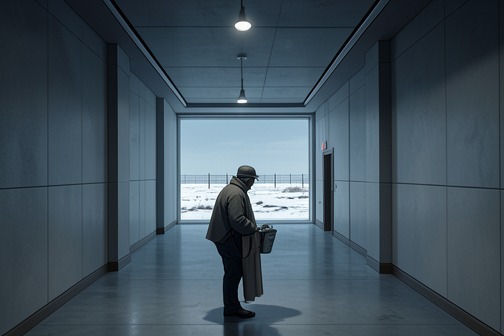
The museum presents these facts in a sterile, oversized building that the narrator experiences as too cold, too empty, and too much. Among its displays, schoolchildren’s shoes from North Korea and blue-packaged Choco Pies draw her attention. The objects make the divided peninsula legible through everyday things as well as military history, while her uncertainty about whether the cakes are real underscores the distance between what the museum exhibits and what she can know of life across the border.
## The Border as a Present-Day Space
The conflict’s geography appears before the museum visit. Walking on the beach with [Yan Kerrand](entity:character-recall-character-yan-kerrand-0464f49baa94), the narrator sees the electrified barbed-wire fence tracing the shore; North Korea is less than sixty kilometres away. The coastline is beautiful to her, but its beauty is inseparable from the barrier that scars it. The border is not merely a line on a display: it runs through the landscape the characters inhabit.
On their drive to the observation point, a checkpoint requires the pair to complete forms. A loudspeaker repeats prohibitions against photography, filming, leaving the marked path, speaking loudly, or laughing. After the forms are returned, the fence opens onto a grey and beige no-man’s-land of reeds, marshes, scattered trees, and snow-filled ditches. An armed convoy escorts them at first, then turns away, leaving them to continue alone. These procedures make the division tangible as a system that regulates movement and conduct, even for visitors on a guided trip.
At the lookout, visitors can pay 500 won to use binoculars aimed at North Korea. The narrator sees the ocean to one side and mountains to the other, but fog lies ahead. The apparatus promises a view across the frontier while the weather withholds it. The trip thus places observation under a double limit: access is carefully controlled, and even from the designated viewpoint the other side may remain unseen.
## Human Encounters and Continuing Danger
The journey also unsettles the boundary between an official destination and lived experience. Earlier, Kerrand brakes suddenly when he sees a woman in a pink jacket beside the road. He thinks she is about to cross; she remains still, watching the car as it moves on. At the observation-point car park, the same woman approaches the narrator, speaks to her, and strokes her cheek. The narrator pushes her away, and the woman whimpers. Kerrand puts an arm around the narrator’s shoulders. The encounter is personal and immediate, set against a landscape organized by rules, fences, and military oversight.
The narrator makes the continuing danger explicit when she tells Kerrand that the beaches are waiting for the end of a war people have stopped believing is real. Hotels and neon signs, she says, cannot dispel the sense that life remains in limbo, vulnerable to collapse. She invokes a recent case: the previous summer, a tourist from Seoul was shot by a North Korean soldier while swimming in the sea, after unknowingly crossing the border. Kerrand responds with an apology. The incident gives the unresolved division a civilian consequence and ties the abstract frontier directly to the ordinary act of entering the water.
## Meaning of an Unfinished War
The Korean War’s significance in these scenes lies in the distance between official closure and lived uncertainty. The 1953 armistice stopped the fighting without establishing peace; the electrified shore, checkpoint restrictions, armed escort, and restricted lookout all materialize that distinction. Even tourism is shaped by the conflict: visitors are directed where to go and told what not to do, while the narrator experiences the border not as a distant historical exhibit but as a condition of home.
The narrator’s image of a winter that never ends gathers this suspended history into the book’s coastal setting. The phrase connects the peninsula’s unresolved political state to the bleak season and to the narrator’s sense that apparent normality can be fragile. The museum can state the war’s dates and casualties, but the fog at the lookout and the reported shooting prevent those facts from becoming safely past. The conflict remains present precisely because its ending has never been secured by peace.
Event 2
Korean Armistice Agreement
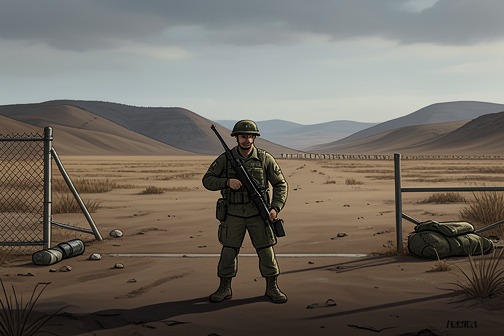
The [Korean Armistice Agreement](entity:event-recall-event-korean-armistice-agreem-a143c4fa6db8) is presented as a halt to the [Korean War](entity:event-recall-event-korean-war-23f6da046fae) that fixed a frontier but did not resolve the conflict. Its significance in the novel lies in that unfinished settlement: the border can be viewed, mapped, and visited, yet the narrator describes the peninsula as still living in the war’s suspended aftermath.
## Historical Settlement and Terms
During a visit to the [Korean border observation area](entity:location-recall-location-9a940c4e997e), [Yan Kerrand](entity:character-recall-character-yan-kerrand-0464f49baa94) stops at a museum display and asks the narrator to translate its account of the conflict. The exhibit dates the war’s beginning to 1950, describes [North Korea](entity:location-recall-location-north-korea-42d1b2b12e72) as supported by the Soviets and China and [South Korea](entity:location-recall-location-south-korea-2664bedd2a67) by the United States and the United Nations, and gives 27 July 1953 as the date the armistice was signed. It says the frontier was created along the 38th parallel, within a no man’s land four kilometres wide and 238 kilometres long, and identifies it as the world’s most heavily militarized border.
The display also records the immense human cost: between two and four million civilian and military deaths over the three years of fighting. Its final fact changes the meaning of the word armistice: no peace treaty was ever signed. The agreement ended active fighting without bringing the two Koreas to a formal peace, leaving the border as the material form of an unresolved conflict.
## The Agreement Encountered at the Border
The museum’s account is embedded in a tightly controlled visit. At a checkpoint, a young soldier makes the narrator and Yan Kerrand fill out forms while a loudspeaker repeats prohibitions against photography, filming, leaving the marked path, speaking loudly, or laughing. An armed convoy initially escorts them across the grey, reed-filled no man’s land; after it turns away, they continue alone. The restrictions make the frontier more than a line on a display: it regulates where visitors may go and what they may do.
At the observation point, visitors can pay five hundred won to look toward North Korea through binoculars. The narrator inserts a coin, but fog obscures the view between the ocean on one side and mountains on the other. The paid act of looking promises access to the divided peninsula and delivers almost none. The landscape’s visibility is limited even as the border is made available for organized observation.
## A Border in Daily Life
The museum is one part of a landscape already marked by the division. On the beach near [Sokcho](entity:location-recall-location-sokcho-9dafe4a808d9), electrified barbed wire scars the coast; the border with North Korea is less than sixty kilometres away. The narrator’s account links the frontier’s historical origin to the present through these ordinary surroundings and through the rules and installations that shape a visit to it.
The narrator also contrasts the display’s historical summary with the lived sense of suspended danger. She tells Yan Kerrand that the beaches may carry scars from past wars elsewhere, but that these beaches are still waiting for the end of a war people have nearly stopped believing is real. Hotels and neon signs coexist with her image of life on a knife-edge, in a winter that does not end. This is her interpretation of the armistice’s legacy, not a claim that the fighting continues in the same form: the agreement has left a condition of limbo rather than a concluded peace.
That danger is not only symbolic. The narrator recalls that the previous summer a tourist from Seoul was shot by a North Korean soldier while swimming, after unknowingly crossing the border. The incident shows how a boundary established in the aftermath of the war can still have lethal consequences, even for someone who does not realize she has crossed it.
## Narrative Significance
The agreement reaches the reader through two different kinds of testimony: the museum’s concise chronology and the narrator’s response to the landscape around it. The display supplies dates, military alignments, dimensions, and casualty figures; the checkpoint, fogged lookout, wire along the beach, and shooting give those facts a present-tense weight. Yan Kerrand listens as the narrator translates the museum text, while she connects its official history to the feeling of living beside a war that has not been formally settled.
The resulting contrast is central to the event’s role in the narrative. The armistice is a historical document that ended combat, but its uncompleted political settlement remains legible in the border’s fences, prohibitions, observation equipment, and risks. The landscape is at once a destination for visitors and a continuing political space for those who live near it.
Event 3
Yan Kerrand’s arrival in Sokcho
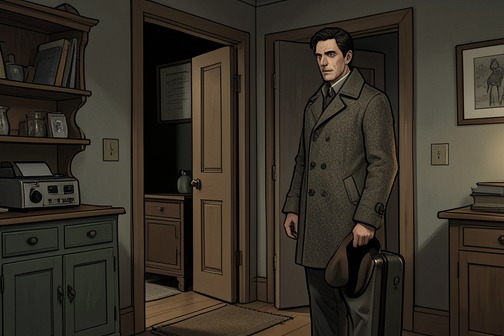
[Yan Kerrand’s arrival in Sokcho](entity:event-recall-event-yan-kerrand-s-arrival-i-5a05e43a68e0) begins with an ordinary request for a room, but its consequences reach beyond the guesthouse reception: the visitor becomes a guest whose drawings absorb the town, while the narrator comes to see both his work and her surroundings differently. Their first encounter is practical and wary; only later does the significance of his presence emerge in the pages he draws and leaves behind.
## Arrival and First Impressions
Kerrand arrived muffled in a woollen coat, set his suitcase at the narrator’s feet, and removed his hat. He asked in English to stay for a few days while he looked around for somewhere else. His passport identified him as [Yan Kerrand](entity:character-recall-character-yan-kerrand-0464f49baa94), born in 1968 in Granville, [France](entity:location-recall-location-france-f5cafc8a8ad4). He appeared younger than his photograph, with less hollow cheeks, dark eyes, and hair combed to one side. The narrator thought he looked straight through her without seeing her.
The small gestures of checking in made the encounter uncomfortable for the narrator, who had been working at the guesthouse for only a month. She offered him a pencil to sign the registration form; he took a pen from his coat instead. As she completed the booking, he removed his gloves, set them on the counter, and inspected the dust and the cat figurine above the computer. His scrutiny made her feel obliged to explain a run-down condition for which she was not responsible.
## The Guesthouse and Its Welcome
With [Old Park](entity:character-recall-character-old-park-0d3a8794998d) absent, the narrator handled the introduction to the guesthouse herself. The property occupied two buildings: the main building held reception, the kitchen, a visitors’ lounge, and corridors of guest rooms lit by bluish bulbs; behind it, down a long alley, stood a restored traditional house on stilts, with two rooms, heated floors, paper dividing walls, a frozen fountain, and a bare chestnut tree in its courtyard. The guesthouse did not appear in guidebooks. People often arrived there by chance, after drinking too much or missing the last bus.
The narrator gave Kerrand the practical details of his stay: breakfast was served from five to ten, laundry went into a machine at the end of the ground-floor corridor, and the convenience store was open around the clock fifty metres away. She also pointed out the nearby bus stop and explained that [Seoraksan National Park](entity:location-recall-location-seoraksan-national-p-d1f5f7e479b9) was an hour away and open until sunset, recommending boots for the snow. The information placed his temporary lodging in a winter resort town whose routines were more specific than the first impression of dust and colored corridors suggested.
## The Visitor Behind the Name
The arrival initially supplied little context for who Kerrand was beyond the passport details and his wish to find other accommodation. Later, the narrator searched for him. A Korean search engine returned no information, but Google.fr led her to pages about his books. He signed his work Yan, and his best-known series was approaching its tenth and final volume, due the following year. It followed a globe-trotting archaeologist, changing location from book to book, through monochrome ink wash, with very little dialogue and only a few words.
That later discovery reframes the contrast between Kerrand’s quiet entrance and the solitary figure at the center of his work. The narrator understood the drawn hero to resemble the artist: sometimes a looming giant among shadow-like figures, sometimes reduced so that only his features remained distinct while other people disappeared behind details such as a chair, stone, or leaf. The visitor who had inspected the guesthouse’s surfaces was himself a maker of images in which attention, scale, and concealment determined what could be seen.
## [Sokcho](entity:location-recall-location-sokcho-9dafe4a808d9) Recast in the Drawings
Kerrand’s work eventually made a direct connection between his stay and the place around him. At his desk, the narrator recognized Sokcho’s hotels in drawings of the hero arriving in a town; the frontier appeared as a scribble of barbed wire, and the cave with its Buddhas also entered the imagined world. He had lifted elements from the narrator’s surroundings and rendered them in grey. His work thus did not simply record the town: it selected and altered its visible landmarks.
When the narrator questioned the absence of color, Kerrand pointed to a snowy mountaintop: a few lines marked the rocks, while most of the page remained blank. She came to notice not the ink but the white space between the lines, where snow seemed to burst from the paper. The panels appeared to distort and blur, and their frames seemed to strain against the character moving within them. In this encounter, the town’s winter scenery became an experience of looking: the page’s emptiness could make light and snow more present than detailed description.
The sketchbook he left behind carries that transformation further. Its hero stands with an old, one-legged heron on a winter shore, facing the sea beneath a snow-covered mountain; the frames are enlarged and the scene has no words. In later pages, figures leave faint yellow and blue traces in wet sand as the sea spreads beyond the beach and into the sky. The images then dissolve into blue: the bird closes its eyes, and a man moves passively beneath the waves, with the afterimage of a woman’s body narrowing to a fine scar. The sequence does not explain the arrival, but it shows how far the work associated with Kerrand’s stay moves from the concrete guesthouse encounter toward an unstable, vanishing landscape.
Event 4
Kerrand and the narrator’s visit to the Korean border
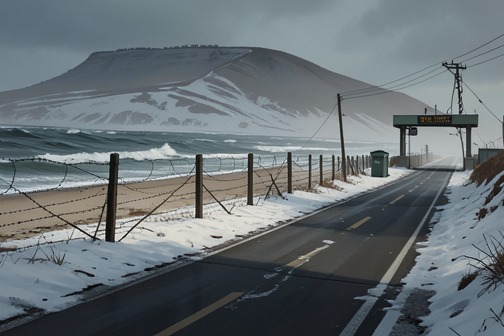
The narrator and [Yan Kerrand](entity:character-recall-character-yan-kerrand-0464f49baa94)’s visit to the Korean border moves from a winter landscape treated as a tourist attraction to an argument about a war that has never formally ended. On the way to an observation point and museum, the pair encounter military restrictions, a border that refuses to yield a clear view, and exhibitions that turn the division of the peninsula into public display. The excursion matters not only for what it teaches Kerrand about the frontier, but for what the narrator insists he must understand about living beside it.
## Background and Approach
The border is present in the landscape before the excursion begins. Walking along [Sokcho](entity:location-recall-location-sokcho-9dafe4a808d9)’s beach, the narrator sees the electrified barbed-wire fence running along the shore and recalls that [North Korea](entity:location-recall-location-north-korea-42d1b2b12e72) is barely sixty kilometres away. The coastline is both a place of beauty and a marked political edge. When Kerrand approaches across the beach, he admires the winter landscape, but his tourist’s appreciation does not yet account for the danger and history embedded in what he sees.
The later drive makes the approach to the border feel less like travel through an ordinary region than passage into an abandoned one. Wind sweeps clouds across the road; skeletal village remains, cardboard boxes, plastic waste, and blue metal sheets punctuate the view. The narrator says that Gangwon Province has been left to rot since the [Korean War](entity:event-recall-event-korean-war-23f6da046fae). She has handed Kerrand the car keys despite hating driving and never intending to take him there herself. Her instructions to drive faster and her translations of the road signs make her both guide and reluctant participant in the visit.
## Checkpoint and No Man’s Land
At the checkpoint, a young soldier makes the pair fill in forms while a loudspeaker repeats the rules: no photography, filming, leaving the marked route, loud voices, or laughter. The restrictions define the visit before the landscape does. After the narrator returns the papers, the soldier salutes and the fence opens onto no man’s land. The escorted convoy eventually turns away, leaving the pair alone on a road winding between snow-filled ditches. The transition from official supervision to isolation gives the space a strange double character: it is a regulated destination, but also a place where the visitors are conspicuously exposed.
A sudden braking interrupts the drive. Kerrand has mistaken a woman in a pink jacket, hunched beside the road, for someone about to cross. He signals for her to go ahead, but she remains still, her hands crossed behind her back. As they drive on carefully, the narrator sees her watching them in the wing mirror until the bend hides her. The moment offers no explanation of the woman’s presence or thoughts; its force lies in the unanswered encounter, set against the route’s procedures and the danger implied by the border.
At the observation point, cold and military control become part of the visitors’ physical experience. A tteok stall stands in the car park, its smell of cold oil reaching them as the wind whips their coats against their legs. [Kerrand’s sketchbook](entity:object-recall-object-ee4fe9ffd1e4) protrudes from his pocket as they climb to the lookout. Visitors can pay five hundred won to look toward North Korea through binoculars, but the view is blocked by fog. The ocean lies to one side, mountains to the other, and ahead there is only mist. The apparatus promises access to the other side while the weather withholds it; looking becomes an activity organized by the border but unable to overcome its separation.
## The Museum and Its History
The pair return to the car park and see an old woman they had encountered earlier, now talking to the woman at the tteok stall. When the old woman notices the narrator, she approaches, speaks to her, and strokes her cheek with a rough hand. The narrator pushes her away, and the woman whimpers. Kerrand calmly puts an arm around the narrator’s shoulders. The brief gesture of care occurs not in the museum but at the edge of the organized tour, amid an encounter neither visitor can readily interpret.
At the museum entrance, payment is taken through a sterile box with a microphone. The narrator asks whether the fee is for two; the woman inside answers in English, and a rubber-gloved hand points the visitors onward. The narrator chokes back the humiliation of being addressed in a language other than her own in front of Kerrand. Inside, the scale and emptiness of the building make their shoes ring across marble floors. Kerrand wanders distractedly until a display of leather helmets prompts him to ask for a translation.
Its account traces the conflict between North and [South Korea](entity:location-recall-location-south-korea-2664bedd2a67) from 1950: the North was supported by the Soviet Union and China, and the South by the United States and the United Nations. The armistice was signed on 27 July 1953, establishing the frontier along the 38th parallel. The displayed figures describe a border four kilometres wide and 238 kilometres long, among the world’s most heavily militarized, and estimate that two to four million people, civilian and military, died during the three-year conflict. The narrator’s translation also makes plain that no peace treaty has ever been signed. The museum supplies dates and measurements, but those facts describe an unresolved condition rather than a finished past.
## The Limits of Looking
The narrator’s attention settles on a display of schoolchildren’s shoes from the North and blue-packaged Choco Pies, unlike the snack’s trademark purple packaging. She wonders whether the pies are genuine and whether they contain cake or were specially made for the museum. Her questions focus on ordinary objects whose authenticity cannot be confirmed from behind the display. This small uncertainty echoes the larger limits of the visit: the other side is made visible through exhibits and binoculars, yet remains inaccessible and partly unknowable.
The excursion’s political meaning becomes explicit when the narrator tells Kerrand that [France](entity:location-recall-location-france-f5cafc8a8ad4)’s beaches may bear scars from past wars, but the beaches here are still waiting for a war to end. Hotels and neon signs, she says, cannot make the situation secure: the peninsula remains in limbo, in a winter that never ends. She supports that claim with a recent example: the previous summer, a tourist from Seoul was shot by a North Korean soldier while swimming in the sea, unaware that she had crossed the border. Kerrand apologizes. The narrator looks down, her hands shaking. The account changes the visit’s terms. What could have remained a scenic outing or a lesson in military history becomes a confrontation with the possibility that an ordinary act, swimming, can cross an invisible line and become fatal. The fog at the lookout has withheld the view; the narrator’s testimony supplies the danger that the view cannot show.
Event 5
The Seollal family gathering
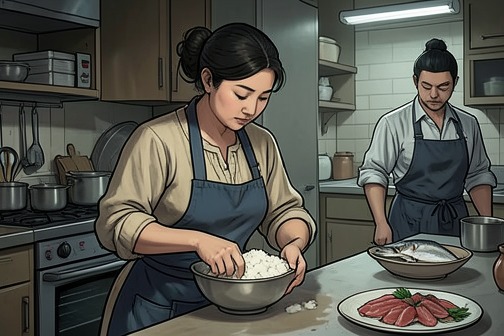
[The Seollal family gathering](entity:event-recall-event-the-seollal-family-gath-47029a4f6e40) is a holiday meal at which food becomes both a demonstration of the mother’s expertise and a means of policing the narrator’s body and future. Set around [Fugu](entity:object-recall-object-fugu-2ea14a5edbbc) sashimi and [Tteokguk](entity:object-recall-object-tteokguk-b991036326fb), the gathering exposes the gap between the mother’s defense of her daughter and the aunt’s intrusive scrutiny; its aftermath leaves the narrator walking alone, physically distressed and wishing that [Yan Kerrand](entity:character-recall-character-yan-kerrand-0464f49baa94) had not seen her in that state.
## Preparation and the holiday
The gathering is preceded by a week of attention to the meal. While eating with her mother at a port-side stall, the narrator hears that the family needs Fugu for [Seollal](entity:time-recall-time-seollal-550211ca0029), but that only [Octopus](entity:creature-recall-creature-octopus-1c0e46019d69) is available at the market. Her mother is the only fishmonger in [Sokcho](entity:location-recall-location-sokcho-9dafe4a808d9) licensed to prepare blowfish: its organs contain lethal toxins, but skilled handling can turn its translucent flesh into an elaborate dish with which she dazzles guests. The meal is therefore anticipated not just as a family obligation but as a display of specialized knowledge and culinary authority.
When Seollal arrives, the narrator makes Tteokguk for the guest house and walks over to tell Yan Kerrand that it is a holiday and everything will be closed. He already knows from [Old Park](entity:character-recall-character-old-park-0d3a8794998d) and has stocked up on instant noodles. The exchange sets the holiday meal against a nearby refusal of shared food: the narrator is smarting because Yan Kerrand has repeatedly declined her cooking, and he explains that he dislikes spicy food. The family gathering will offer another, more fraught setting in which cooking and eating determine who can care for whom, and who gets to judge.
## A meal arranged around skill and status
The narrator and her mother wear traditional outfits, which the aunt mocks on seeing them, laughing at the idea of dressing that way in the present day. Chastened, the mother forces a laugh. They arrange the table in the kitchen, carefully placing cushions on the tiled floor. These small preparations make the gathering feel formal, but the aunt’s appearance and manner also establish a contest over taste and social standing: she arrives heavily made-up and in a smart tailored suit, then surveys the kitchen walls with disapproval.
The aunt praises the Fugu sashimi, saying she does not eat it in Seoul because she distrusts the Japanese chefs who claim to have licenses there. She invokes the danger of the dish, asserting that twenty grams of toxic flesh could asphyxiate a man, and frames her suspicion in national terms. Her admiration for the sashimi is thus inseparable from her distrust of those who prepare it elsewhere. The mother’s mastery gives the meal its centerpiece, while the aunt’s approval quickly shifts to inspection: she notices the greyish color of the Octopus dish and asks what caused it.
The mother answers that the narrator pierced the ink sac and cannot be trusted with a knife. The accusation has a concrete basis in the dish’s appearance, but it also marks a boundary between the mother’s confidence with dangerous ingredients and her refusal to entrust her daughter with the same work. Earlier, while preparing Fugu, the mother removed the poison-laden intestines, ovaries, and liver without piercing them; the narrator watched but was never permitted to handle the fish. At the table, the imperfect color of the Octopus makes the narrator’s small mistake visible beside the mother’s exacting skill.
## Scrutiny at the table
The aunt calls the narrator sickly-looking and blames the air in Sokcho, sweeping her eyes across the dirty kitchen walls. The narrator concentrates on the Tteokguk and studies her face reflected in its surface. As her spoon makes ripples, her nose smudges, forehead undulates, and cheeks seem to run into her chin. The shifting reflection offers no stable image to counter the aunt’s judgment. The aunt calls the soup bland; the narrator is so intent on ladling it into her mouth that she cannot taste it.
The mother adds soy sauce to the soup, splashing her sister. The aunt protests that the soju-stained spill has landed on expensive silk, and the mother turns away from the argument by asking the narrator to speak to her aunt. In response, the mother announces that the narrator will soon marry [Jun-oh](entity:character-recall-character-jun-oh-4aba809329b7). The announcement makes marriage part of the meal’s family business, but the aunt immediately treats the narrator’s body and appearance as matters she can manage. She squeezes the narrator’s buttocks and thighs, and the narrator moves away before the aunt can reach her breasts. The aunt says she will take charge of the wedding outfit and makeup, criticizes the narrator’s glasses, and offers to pay for eye surgery in Gangnam.
The mother resists that proposed alteration. She says her daughter is lovely as she is, glasses included, and does not need changing. But her defense does not stop the aunt from asking why the narrator is stuffing herself. The mother protests that the remark should not be made when, for once, her daughter is eating. The narrator’s fingers tighten around her spoon. When the aunt chews kimchi with her mouth open and scraps of cabbage spurt among the dishes, the narrator watches her pick them up with chopsticks. The meal’s intimacy has curdled into exposure: bodies, appetites, clothing, and manners are all being inspected in public.
## Departure and aftermath
The narrator stands, puts on her coat, and says she is returning to the guest house. The aunt raises an eyebrow at the mother, asking whether the narrator is not going to the cemetery. The mother gives her daughter a pleading look, then shrugs in resignation and watches her leave. The exchange makes the departure a break not only from the table but from an expected family observance; the narrator does not stay to comply.
There are no more buses, so she walks with her arms wrapped around her abdomen. She has eaten until her stomach hurts, repeating the loss of control she had experienced earlier with her mother: at the stall, she weighed each mouthful before eating faster and faster, drinking long draughts of makgeolli until she could no longer stop. After the gathering, bodily discomfort is no longer an abstract fear of how she looks; it is the immediate consequence of what she has eaten and cannot undo.
Back at the guest house, she catches sight of her wind-tangled hair and her skirt spattered with sand and mud. She imagines her body misshapen, her stomach swollen from the soup, and wants the image erased from Yan Kerrand’s mind. He has left his door half open and appears as she passes, but she does not stop. The episode sharpens the difference between the mother’s spoken defense of her daughter and the narrator’s own persistent distress about being seen. It also extends the book’s recurring link between cooking and care: later, the narrator asks Yan Kerrand to taste her cooking, and he agrees, though his attention seems elsewhere. The gathering offers no easy reconciliation through food; instead, it leaves the narrator carrying both the meal and the scrutiny away from the family table.
Event 6
The narrator’s breakup with Jun-oh
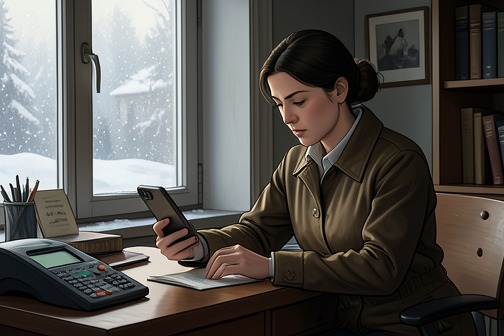
[The narrator’s breakup with Jun-oh](entity:event-recall-event-the-narrator-s-breakup-b7954042b06d) is the point at which a practical disagreement about where to live becomes an acknowledged separation. [Jun-oh](entity:character-recall-character-jun-oh-4aba809329b7) wants her to move to Seoul for his new job; she refuses, unwilling to leave her mother or bring her into a household where she would have no work. When the narrator later tells Jun-oh by phone that the relationship is over, he says he is tired and will let her go, though he postpones further discussion. The decision is quiet, but its consequences register through the couple’s unresolved intimacy and the narrator’s physical response to the cold outside her window.
## The Dispute Over Seoul
Jun-oh returns to the guest house close to midnight after snow delays his bus. The narrator has prepared ginger calamari, but he does not eat because he has already eaten and is watching his diet. As they walk to her room, she points out that he never asks for her news on their phone calls; he counters that she has never called him. The exchange exposes the distance as a shared grievance, but Jun-oh is the one who turns it into a demand for change: he is tired of the long-distance relationship and wants her to move to Seoul. He says his salary can support them until she finds work and suggests that her mother could come too.
The narrator refuses both parts of the proposal. She cannot abandon her mother, but she also does not want her mother living with them, especially when she would have no job in Seoul. Jun-oh describes his job as a genuine opportunity that he cannot decline and tells the narrator that he loves her. She nevertheless says she will stay in [Sokcho](entity:location-recall-location-sokcho-9dafe4a808d9) and does not ask him to give up the position. Her recollection of Seoul is not a neutral map of alternatives: she remembers drinking, parties, blinding lights, noise, and a city crowded with girls and swaggering boys. Against that sensory recollection, staying becomes a choice against the future Jun-oh is offering, not merely a delay until circumstances improve.
## Intimacy Before the Separation
That night, the couple lie in bed without speaking, looking at the ceiling. Jun-oh eventually mentions taking the bus back to Seoul in the morning. The narrator’s feet are cold, and she presses herself against him. When he searches for the nape of her neck, she whispers that someone is in the next room. He lifts her nightshirt and begins to touch her; she protests, then lets him continue. The scene does not undo their disagreement or settle their future. Instead, the narrator recognizes that she wants to be desired, making physical closeness coexist with the decision that will soon end the relationship.
## The Phone Call and Its Aftermath
The decisive breakup comes later, after Jun-oh has left. The narrator asks how he is and then tells him she is breaking up with him. His silence is long enough that she thinks the call has ended. When he asks why, she stands and opens the curtains. Wet snow is falling; a figure passes under a newspaper for shelter before disappearing into an alley. The passing stranger’s brief appearance gives the scene a visible image of exposure and disappearance, while the call itself remains spare and hesitant.
Jun-oh eventually answers in a faint voice. He says he is tired and will let her go, adding that they can talk about it again later. The postponement leaves the breakup emotionally unresolved even as the narrator has stated her decision. She removes her jumper, presses her belly and breasts against the window, and stays there until the cold numbs her before going to bed. The gesture makes the separation bodily: after the muted exchange of declarations and silence, she seeks numbness through contact with the winter glass.
Event 7
Kerrand’s departure from Sokcho
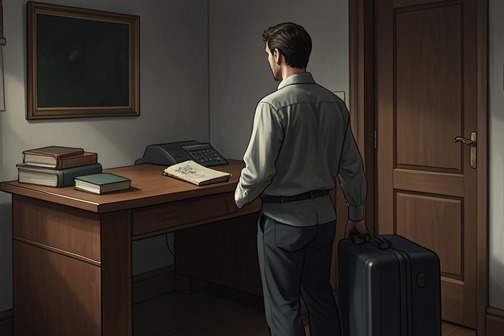
[Yan Kerrand](entity:character-recall-character-yan-kerrand-0464f49baa94)’s departure from [Sokcho](entity:location-recall-location-sokcho-9dafe4a808d9) is both a practical parting and the ending of an unfinished exchange between the artist and the narrator. He tells her that he has been absorbed in his hero for too long and will return to [France](entity:location-recall-location-france-f5cafc8a8ad4) rather than take up more of her time; after he is gone, his empty room and the frayed sketchbook left on the desk give that decision a quiet, unresolved afterlife.
## Decision to Leave
The departure begins not with a formal farewell but with Kerrand’s return to the narrator’s door. He needs to go to the supermarket again and asks whether she can translate one word for him, while making clear that she need not accompany him. The request is ordinary, but the narrator holds her breath as the encounter changes course. Kerrand eventually says that he will manage without the translation. After a pause, he tells her in French that she was right: he has been too wrapped up in his hero for far too long. He has decided to return to France and says he will not waste any more of her time. He will leave in four days.
The sequence makes his departure more than travel logistics. Kerrand connects it to his preoccupation with his work and to the narrator’s time, acknowledging both his artistic absorption and the possibility that his presence has imposed on her. He does not extend the conversation into a full explanation. He goes back to his room, and the narrator goes to bed and curls up beneath the covers. His decision is stated plainly; its emotional weight appears instead in the pause before it and in her response afterward.
## The Last Encounter
On the morning of the fourth day, the narrator is sorting laundry when she finds trousers apparently forgotten by the girl with the bandages. She takes off her tights to try them on. The trousers fit loosely around her thighs but will not fasten at the waist; she pulls them off, nearly in tears, and notices a run in her tights. While looking through the washing for another pair, she sees Kerrand standing in the doorway with a bag of clothes.
The scene places her discomfort and his imminent departure in the same confined space. She tugs her sweater down to hide her legs and tells him she is sorting colours, offering to take his clothes. He sets the bag down awkwardly, then changes his mind: there is no need to wash them, because his bus leaves the next morning at ten. The practical detail confirms that the announcement has become immediate. He offers to send her a copy of the book when it is published; she tells him not to feel obliged. Their exchange recognizes a future connection through the book, but neither turns that possibility into a promise of continued closeness.
## Traces of Departure
The narrator does not describe watching Kerrand board the bus. His absence is established afterward, through the traces left in the courtyard and his room. The courtyard door is open, and two fine lines of footprints cross the snow from Kerrand’s room, past the fountain and chestnut tree, to the door before disappearing into the distance. She stares at the tracks, then walks along the covered walkway to his room.
Inside, the curtains are drawn and the quilt is carefully folded on the bed. The smell of his breath remains, mingled with incense; in the mirror, a beam of light catches dust settling from the ceiling onto the desk. These details make the room feel recently occupied but already relinquished. The narrator notices the dust on the windowsill, sits carefully on the bed without wanting to wrinkle the sheets, and listens as the buzzing in her ears grows softer. The light dims and blurs the room’s contours. A fish and an ink stain at the foot of the bed remain in view, but even the stain, she thinks, will fade in time. The departure is thus rendered as an accumulation of absences rather than a witnessed farewell.
## The Sketchbook Left Behind
On the desk lies Kerrand’s frayed canvas sketchbook. The narrator puts down the platter she has brought and opens it. Its first large, wordless images show his hero and a heron standing together on a winter shore, gazing toward the sea, with a snow-covered mountain behind them. The old-looking bird has one leg and silver feathers; water pours from its beak and becomes a river flowing into the ocean. The sequence retains Kerrand’s hero, but surrounds him with an image whose movement leads beyond the figure and toward the sea.
As the narrator turns the pages, the pictures become less bounded. Faceless, ageless people leave faint yellow and blue traces in wet sand; the sea spreads beyond the beach and into the sky. The depicted place seems to form as it is conceived and then dissolve, a threshold where falling snow meets sea spray. In later pages the story itself appears to fade: the bird’s eyes close, the paper becomes blue, and the man moves passively beneath winter waves. An afterimage of a woman’s shoulder, belly, breast, and lower back narrows into a stroke of ink on a thigh, ending in a long, fine scar rendered as if carved with a brush.
The notebook does not explain why Kerrand left it, and the scene does not turn it into a definitive message. Instead, its changing images complicate the departure: the hero remains, but the drawn world opens around him and finally gives prominence to a woman’s body and its marked surface. The narrator’s act of opening the book makes its unfinished story part of the parting. Kerrand has gone from the room; what remains is a sequence of images that she can look through but cannot reduce to a settled explanation.